
Vol. 162 - Don't Be a Dick
On how to embrace your kids' talents while not sucking the fun out of everything

If you know anything about me (which, over the course of 161 essays, I hope you do), you know that I love three things more than most everything else: my kids, writing, and riding bikes.
Thankfully, I occasionally get to do all three of those things at once, as I did with a recent story that the amazing people over at Cycling Weekly—which has the rarified distinction of being the oldest cycling magazine on Earth, having been in print since 1891—commissioned for a recent print issue.
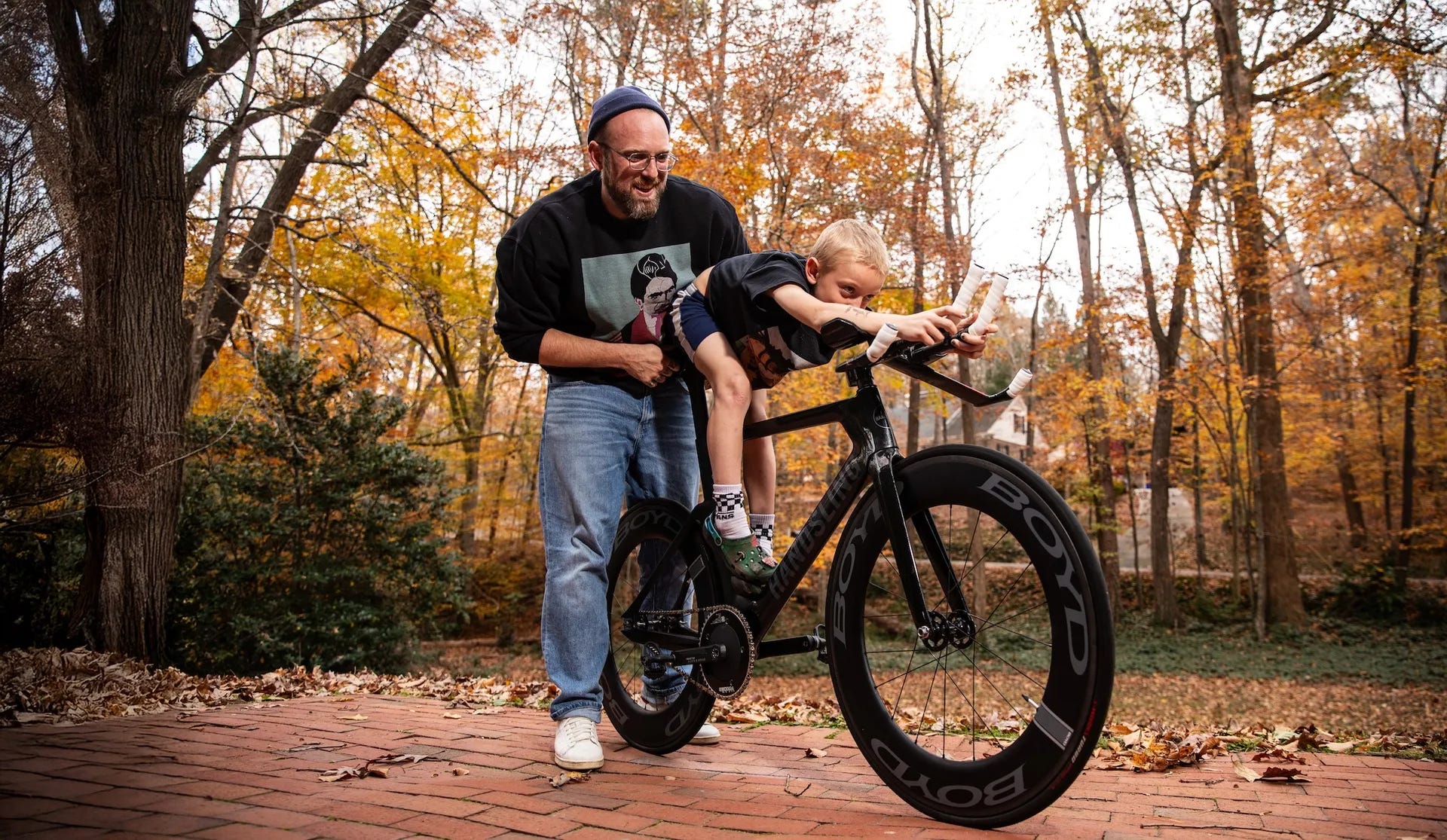
The piece I wrote focuses on how, since the minute he was able to ride a two-wheel bike, my son has shown immense promise as a bike rider. And so, I wondered, how do I balance the idea of pushing him to achieve his maximum potential while also realizing that A: it’s statistically unlikely he’ll ever become a professional bike racer, B: he should always love riding his bike first and foremost, and C: he’s only eight.
For the story, I talked to some people who really know what they’re talking about: an elite youth cycling coach whose charges have raced in the Olympics and Tours de France; a son and aspirant racer whose father is one of the greatest bike racers we’ve ever seen; and a father who is one of America’s most successful bike racers ever, whose oldest son is now at the dawn of his own professional career.
Most importantly, I also talked to my son at length about whether or not he was comfortable appearing in print and online for millions of people to see and read about. Emily and I sat him down one night, explained as best we could what that all meant, and how the nature of the internet meant that this story would, in theory, live somewhere forever. Despite our cautious tone, he was thrilled at the idea and gave us an enthusiastic green light.
And so, with accompanying photos shot by our dear pal, amazing photographer, and world-class dad himself, Brian Hueske, we were overjoyed when the print edition arrived from the United Kingdom a few weeks ago. And just this morning, the piece went live online. I’ve posted a snippet of it below but encourage you to head over to Cycling Weekly Dot Com and read the story in full.
Ride on. Keep the rubber side down. And don’t be a dick.
As my seven-year-old son turned his first ever laps at our nearby velodrome, it was immediately clear that he was a natural. It was even clear to some of the other coaches, timers and racers at the track, one of whom, a USA Cycling official, leaned in and said to me, “He really gets it, huh?”
My lizard brain took over: immediately, I saw my son as a young man winning in velodromes around the world. I saw myself cheering him from the stands as he stood atop the podium as an Olympic medal was placed around his neck. Gold, of course. I urgently needed to remind myself that whatever became of his cycling future would be his story, subject to his motivations, not mine.
On the long drive home, as my little boy dozed in his seat, I wondered, as I often do, whether or not I’m doing a good job as a father. Specifically, I thought about my influence on my son’s cycling. My wife and I have had countless hours of conversations about his natural competitiveness and how best to harness it, not tamp it down in the name of good sportsmanship.
We’ve also discussed ad nauseam the other side of that coin: how do we foster an environment that allows our kids to stoke their competitive fire while also teaching them to be good, humane people. Let’s face it, the likelihood that they’ll actually become pro cyclists is very small. Competitiveness can be helpful in many facets of life, and so I wondered: where is the line?
How do I encourage my son to be unafraid to achieve greatness while also remembering that he is, after all, just seven? How do I maintain this love of bicycles without beginning to see them as a tool of work and career ambition?
Unfortunately, as in most aspects of parenting, there is no clear answer. But the first question I had to answer was, when? As in, when do I start pushing him and allowing him to push himself? When do I start concerning myself with his performance?